OPB is reluctant to officially endorse the Golden West Project


——– Original Message ——–

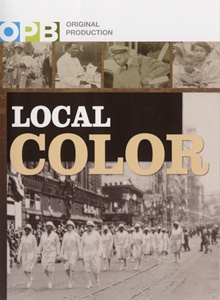
Subject: OPB documentary “Local Color”
Date: Sun, 14 Sep 2008 10:01:47 -0700
From: WILL BENNETT <GOLDEN-WEST-PROJECT@AFRICAN-AMERICAN-HISTORICAL-DISTRICT.COM>
Organization: GOLDEN WEST PROJECT
To: Jeff Douglas <JDouglas@opb.org>

Jeff, OPB & Others =
As for what I seek is just recognition. My perceptions of Golden West Project (an unorganized organization) has thus far been that of a catalyst. This also is perception of many in the community. I have recently became aware of the efforts of OPB to release “Local Color” that has been in the works for a few years, but the priority of this wasn’t all that high. Just last week, to my surprise, in City Hall Chambers the name Will Bennett was associated with the re-release and distribution of OPB’s documentary “Local Color” along with some history of it’s production. I was grateful. And all this will be well documented through audio, video, and perhaps print as a matter of city record-as a matter of history.

To conclude, what ever my involvement let it be stated in such a manner as you’ve indicated and is appropriate for OPB. My timing has been great, for many things has come together in a wonderful whole to reclaim our local African-American history. As a result, washing away the whitewashed history of Portland & Oregon.

peace
will b

(~_~)(~_~)(~_~)(~_~)(~_~)(~_~)(~_~)(~_~)(~_~)(~_~)(~_~)(~_~)(~_~)(~_~)(~_~)(~_~)(~_~)(~_~)(~_~)(~_~)(~_~)(~_~)(~_~)(~_~)(~_~)(~_~)(~_~)(~_~)(~_~)

Jeff Douglas wrote:

Hello Will,

I think I’m on the mend. Thanks for asking.

I’m not sure what you want in an “official statement”. OPB is reluctant to officially endorse the Golden West project because we have no first hand knowledge about your mission, your accountability for funds, etc.

For several years, OPB had been interested in clearing the rights to “Local Color” so this program could not only be broadcast but also made available to schools, libraries and for sale. Because Jon Tuttle died, it took some difficult detective work to not only find out what rights were missing but also to locate the holder of those rights. It was fortunate for both of us that you became aware of the program close to the time that we finally were able to clear the rights and you have done much to get the word out about the program. We appreciate your advocacy. But it’s not accurate to say that we wouldn’t have done this without your encouragement. As I say we’ve been working on this for a couple of years.

I would be happy to acknowledge your help in spreading the word about this quality program and having it shown but I don’t think I can offer much more than that. However I certainly wish you every success.

OPB Program Director Mary Gardner has indicated an interest in re-airing local color perhaps connected to a run of “Oregon Expereince” programs next February. We’ll try to keep you in the loop about the rebroadcast date.

Jeff

Jeff Douglas
Senior VP & Station Manager
OPB-TV

(~_~)(~_~)(~_~)(~_~)(~_~)(~_~)(~_~)(~_~)(~_~)(~_~)(~_~)(~_~)(~_~)(~_~)(~_~)(~_~)(~_~)(~_~)(~_~)(~_~)(~_~)(~_~)(~_~)(~_~)(~_~)(~_~)(~_~)(~_~)(~_~)

WILL BENNETT <GOLDEN-WEST-PROJECT@AFRICAN-AMERICAN-HISTORICAL-DISTRICT.COM> writes:
Jeff =
Again We thank you…..
I hope your health matter is improving, with that said….
It’ be nice if I could get an official statement from OPB that expresses the below….This will Help Golden West Project a great deal to carry on it’s mission/endeaver/purpose etc……
peace
will b.

Subject: FW: [Libs-Or] FW: OPB documentary “Local Color”
Date: Wed, 6 Aug 2008 18:20:42 -0700
From: ELDER Abigail
To:

Message
Will– just wanted to let you know that OPB has given me 100 copies of the DVD to distribute to Oregon public libraries (my message to libraries is below.) We are adding nine copies to Multnomah County Library and keeping one additional copy to show at programs.

OPB provided a limited license that allows libraries to show the film to the public, so I hope that some libraries will take advantage of that option.

Congratulations to you on the release of this DVD. The person at OPB said that your persistence is what made this project a reality.

-abigail/ central library

(~_~)(~_~)(~_~)(~_~)(~_~)(~_~)(~_~)(~_~)(~_~)(~_~)(~_~)(~_~)(~_~)(~_~)(~_~)(~_~)(~_~)(~_~)(~_~)(~_~)(~_~)(~_~)(~_~)(~_~)(~_~)(~_~)(~_~)(~_~)(~_~)

—–Original Message—–
Sent: Wednesday, August 06, 2008 5:49 PM
To: libs-or@listsmart.osl.state.or.us
Subject: [Libs-Or] FW: OPB documentary “Local Color”

Hello! Oregon Public Broadcasting has generously donated 100 copies of the documentary “Local Color” to be distributed to public libraries throughout the state. First aired in 1991, this is the first time the documentary has been publicly available. A limited license agreement allows for public showings of the documentary.

From the OPB website: “This 1991 OPB documentary chronicles the little known history of racism in Oregon and the moving story of people, both black and white, who worked for civil rights. Jon Tuttle was a news reporter in Portland for most of his life but said he was unaware of much of this history until late in his career. He set out to document the story but found he was almost too late as some of the important participants had died and others were getting on in age. Local Color is the story of black Oregonians and their struggle for equality told by the people, both black and white, who lived the history. But there are moments of highly disturbing racism in a state not known for racial diversity. But there are also moments of inspiration and courage as people take a stand to bring about important change. Without this historic documentary, many of these stories, from some of the state’s best people might have been lost and forgotten.”

If you would like copies to add to your public library, please send an email to me at abigaile@multcolib.org with your library, address and how many copies you would like.

abigail elder, central library
801 sw 10th avenue
portland, or 97205
503.988.5472
aim: mclabigail

Posted in Uncategorized | Leave a comment

Central City Concern, a.k.a Central City Control


Will Bennett is now back in association with the committee….
peace
will b.
(~_~)(~_~)(~_~)(~_~)(~_~)(~_~)(~_~)(~_~)(~_~)(~_~)(~_~)(~_~)(~_~)(~_~)(~_~)(~_~)(~_~)(~_~)(~_~)(~_~)(~_~)
Thank you for your call Jennifer,
I am afraid I am running too busy today. But I will express that I am very disappointed that Will has had the experience that has led to his decision. My own take is that there seems to be a cultural disconnect. I hope that with the number of great folks that have been invited to give input to this project, this will be remedied. Will is a collaborator and quite frankly gives very little credence to the idea that those who own the “stuff” are in authority. This is African American history and CCC has the opportunity to help restore what has been in their care and neglected for some time. Certainly the tie between honoring ACCURATE history and promoting mental health and recovery is recognized by CCC. Can you also navigate this project process in a way that encourages a collaborative approach to creativity and remains committed to giving appropriate recognition?
I believe you can successfully partner with your advisory committee to mobilize the tremendous creativity and intelligence the project has assembled. The project being the entire collection of energy and heart that lead to the grant application being approved.
I also hope you will ask Will to reconsider. He told me that he thought everyone needed to have a meal together. There is wisdom in that. This is too important.
Thanks for asking for my input.
Karyn Hanson
(~_~)(~_~)(~_~)(~_~)(~_~)(~_~)(~_~)(~_~)(~_~)(~_~)(~_~)(~_~)(~_~)(~_~)(~_~)(~_~)(~_~)(~_~)(~_~)(~_~)(~_~)

Will:

Please don’t fall on your sword over details. You have made this project happen & your involvement is very important to me and others. I don’t like committees, either. For the sake of the so-important history, I hope you will hang in there.

Thanks very much and my great compliments on your tenacity (often a rare quality) –

Cathy Galbraith

(~_~)(~_~)(~_~)(~_~)(~_~)(~_~)(~_~)(~_~)(~_~)(~_~)(~_~)(~_~)(~_~)(~_~)(~_~)(~_~)(~_~)(~_~)(~_~)(~_~)(~_~)

From: WILL BENNETT [mailto:GOLDEN-WEST-PROJECT@AFRICAN-AMERICAN-HISTORICAL-DISTRICT.COM]
Sent: Thursday, September 18, 2008 9:28 AM
To: GOLDEN WEST PROJECT, INFO
Cc: Jennifer Gates; ‘Avel Gordly, Sen’; ‘Richard Harris’; ‘Jackie Peterson, Dr.’; ‘Cathy Galbraith’; ‘Dick Bogle’; ‘Darrell Millner, Dr.’; hart@chapc.com; bings@serapdx.com; banfield@centralcityconcern.org; mcg@nothingbutquality.com; ‘Stephanie D. Stephens (Planning)’; ‘Cassie Cohen (Planning)’; Sylvia E Welch; Nicholas T. Starin (Planning); Liza Mickle (Planning); Jason Renaud; Karyn Hanson
Subject: Re: Golden West Historic Display Advisory Committee

(~_~)(~_~)(~_~)(~_~)(~_~)(~_~)(~_~)(~_~)(~_~)(~_~)(~_~)(~_~)(~_~)(~_~)(~_~)(~_~)(~_~)(~_~)(~_~)(~_~)(~_~)

SEE ATTACH….

As this story unfolds and as you will see that there’s a need for better Ethnic History-Keeping—history of the Golden West Historic Display. This story will conclude with why Central City Concern/Control became aware that there was a grant to be had, and why Golden West Project reluctantly brought the proposal to them. Bear with me….

When I began the Golden West Project in Feb. 2006 I was then contacted my City Planning they were excited that I was concerning myself with matters of Old Town’s African-American History, For no one else was or had been in quite awhile. I knew I was on the right track. SEE ATTACH…..

Please note I was being put off my CCC with promising that they were going to be doing something very, very, very soon. 2 1/2 years I was being told this in their typical type of jargon ( have all the emails to this effect). The display itself being in neglect for nearly 18 years. I blame both CCC & the African-American Community for this.
Stay Tuned….
peace

will b.

(~_~)(~_~)(~_~)(~_~)(~_~)(~_~)(~_~)(~_~)(~_~)(~_~)(~_~)(~_~)(~_~)(~_~)(~_~)(~_~)(~_~)(~_~)(~_~)(~_~)(~_~)
Jennifer Gates wrote:

Will – We are sorry to hear that you are resigning from the Advisory Committee. We’re glad to hear your interest and support of the project will continue. You can always be proud of being the earliest and foremost person with the vision that the display could be expanded and improved. Please keep us posted and stay in touch.

Jennifer Gates – Housing Development Coordinator – Central City Concern
503-525-8483 ext 208 fax: 503-228-1696 JGates@centralcityconcern.org


From: WILL BENNETT [mailto:GOLDEN-WEST-PROJECT@AFRICAN-AMERICAN-HISTORICAL-DISTRICT.COM]
Sent: Wednesday, September 17, 2008 1:19 AM
To: GOLDEN WEST PROJECT
Cc: Avel Gordly, Sen; Jennifer Gates; ‘Richard Harris’; ‘Jackie Peterson, Dr.’; ‘Cathy Galbraith’; ‘Dick Bogle’; ‘Darrell Millner, Dr.’; hart@chapc.com; bings@serapdx.com; banfield@centralcityconcern.org; mcg@nothingbutquality.com; Stephanie D. Stephens (Planning); Cassie Cohen (Planning)
Subject: Golden West Historic Display Advisory Committee

(~_~)(~_~)(~_~)(~_~)(~_~)(~_~)(~_~)(~_~)(~_~)(~_~)(~_~)(~_~)(~_~)(~_~)(~_~)(~_~)(~_~)(~_~)(~_~)(~_~)(~_~)

Central City Concern, a.k.a Central City Control =
I no longer wish for me, my name, nor Golden West Project to be associated with the Golden West Historic Display Advisory Committee. I still do support the project but I must do it in my own ways & my own methods….
If there’s need for more of the whys and the how comes let me know….
I don’t like Committees & at times don’t like to even hear the word Committees
peace
will b.

GoldenWestProject

– preserves, perpetuates, promotes and integrates african-american heritage & culture in the pacific northwest –

“I’ll Take You There”

African-american-historical district.com

Guided by ancestral wisdom and improvisation

African-Americans of heritage in Portland & more…

‘Wasthemostracistcity’

Will Bennett
Community Practitioner & Futurist/Historian
at Large
17935 NE Oregon St. #A
Portland OR 97230-6566
503.666.8939-Voice
WILLBE1960@GMAIL.COM
(~_~) be in one’s own dignity (~_~)
But such is the irresistible nature of truth, that all it asks, and all it wants, is the liberty of appearing.–Thomas Paine
i can fix it
at large:
A – without restraint or confinement; as, to go at large; to be left at large.
B – diffusely; fully; in full extent; as, to discourse on a subject at large.
“Blacks have a 375-year history on this continent:
245 involving slavery,
100 involving legalized discrimination,
And only 30 involving anything else….”
As historian roger wilkins has pointed out (wilkins, 1995)
the king center
“what is not what has to be.”
-preserves, perpetuates, promotes and integrates african-american heritage & culture in the pacific northwest-

We are made wise not by the recollection of our past, but by the responsibility for our future. –George Bernard Shaw

guided by ancestral wisdom and improvisation

If in our daily life we can smile, if we can be peaceful and happy, not only we, but everyone will profit from it. This is the most basic kind of peace work. –Thich Nhat Hanh

Posted in Uncategorized | Leave a comment

Golden West Historic Display Advisory Commitee


August 26, 2008
Hello,
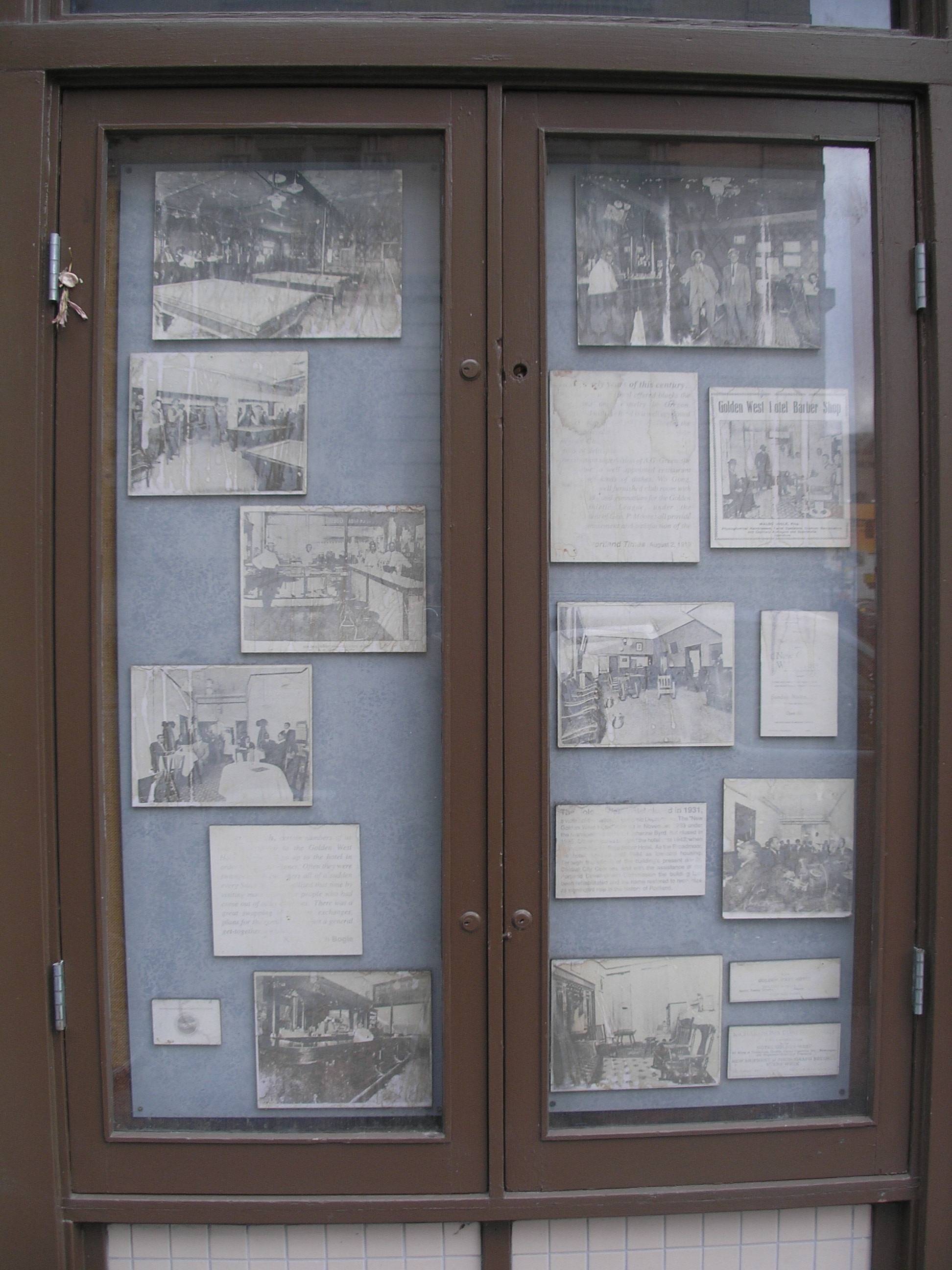
As you know, the Golden West building is one of the oldest remaining landmarks of African American history in Portland. Central City Concern purchased and renovated the building in 1989, and recently took full ownership. For the past 18 years, the Golden West has served countless homeless and mentally ill people. A year ago CCC undertook a number of renovations to the building. We earmarked $4000 to restore the historic display that faces Everett Street sidewalks. When the Visions in Action grant program became known, CCC contacted Old Town History Project Director Jackie Peterson who helped us put together an application. In June, CCC received a $9250 VIA grant. The combined funds, plus in-kind labor contributions primarily by CCC, will allow us to restore and improve the exhibit panels and to also add two new display windows on the Broadway side of the building. The major goal is to convey the vibrancy of the African American neighborhood around the Golden West in the early part of the 20th century.

We are honored to invite you to serve on an Advisory Committee for this project restoring and expanding the historic display. The Advisory Committee will be a diverse group of approximately 10 persons with representation from the African American community, from the local neighborhood, and from CCC. Those invited include:

Richard Harris, Advisory Committee=project director-Executive Director Emeritus of CCC
Jackie Peterson, PhD, Advisory Committee=project historian and curator-Historian specializing in America’s social and Multi-Ethnic history. Curator for multiple exhibits. Founder of the Old Town History Project.
Cathy Galbraith, Advisory Committee=project historical consultant-Director of the Bosco Milligan foundation for architectural preservation; knowledgeable about African American history in Portland.
Bing Sheldon, Advisory Committee=SERA is donating design services-Principal with SERA Architects and board member of the Old Town History Project.
Jennifer Gates, Advisory Committee=administrative project manager for the project-CCC housing development coordinator.
Dick Bogle, Advisory Committee=His grandfather ran the barber shop at the Golden West Hotel in its heyday. The barber’s daughter-in-law, Katherine Bogle, was the prime author of the original historic display.
Darrell Millner, PhD, Advisory Committee=Professor of history at PSU, Black Studies Dept. with specialty in African American history.
Billy Anfield, Advisory Committee=CCC WorkForce Employment Mentor; his forbearers lived in the neighborhood of the Golden West Hotel.
Bill Hart, Advisory Committee=Principal with Carlton Hart Architects which did renovation work on the Golden West recently.
Will Bennett, Advisory Committee=Community Practitioner. His “Golden West Project” is one of the ‘Partners and Friends’ of the City of Portland’s Vision-Into-Action (VIA) program which awarded us a grant.
Michael Chappie Grice, Advisory Committee=Co-Founder of World Arts Foundation Inc. Helped create the original historic display at the Golden West Hotel in 1990.
As a volunteer for this committee, we hope you’ll do the following:
*Attend two meetings to review the proposed content of the historic display;
*Help make the ‘unveiling’ event a success;
*Help publicize the exhibit to schools, history groups, community groups, etc.

Please confirm your willingness to serve on this committee. Our first meeting will be late September or early October. Please let us know if there are time you’d be unavailable to meet.
Thanks,
Richard L. Harris & Jennifer Gates
Central City Concern

——– Original Message ——–

Subject: RE: Need any assistance?
Date: Sat, 13 Sep 2008 20:44:04 -0700
From: Jackie <jackielp@comcast.net>
To: ‘WILL BENNETT’ <willbe1960@gmail.com>

Will, the best help you can be to me as the professional historian on the project is as a member of the advisory committee which will meet in a few weeks now. I do not have a date for that meeting, but I know that Jennifer is working on it. While historians tend to work alone rather than by committee, they do rely on expert advice and that is what I expect to get from the committee which is composed of other scholars and community leaders with a long association with the Golden West. I know that once the exhibit is in production there will be a need for planning for the opening, publicity, and community and educational outreach. The Golden West project has long been involved in the latter, and I think you should ask Jennifer or Richard about specific things that you could be doing. Also, since this is a Central City Concern project and grant, I will be turning over the materials I generate for the exhibit to them, but I am sure they will make them available to the Golden West project as well. I am looking forward to your feedback and that of other advisory committee members at the upcoming meeting.

As for the Old Town History Project, I will put your email on our mailing list and keep you posted about upcoming events. Unfortunately, we haven’t been very active in the last year or so, largely because I have been very busy with several book an exhibit projects. This should change when I retire in a year and a half from now.

Regards,

Jackie

—–Original Message—–
From: WILL BENNETT [mailto:willbe1960@gmail.com]
Sent: Tuesday, September 09, 2008 2:50 PM
To: Jackie Peterson, Dr.
Cc: Karyn Hanson
Subject: Need any assistance?

Jackie =
How you be?
Golden West Project would like to be able to do some paid or not paid work for you in and around the Display Project.
Golden West Project also has desire to join Old town History Project mainly because we have sight on Union Station (been in communication with PDC on this matter) and to do follow-ups regarding the Golden West Hotel and the areas close to it.
let me know how you feel about this…
peace
will b.

Posted in Uncategorized | 2 Comments

The “Negro Question” and Oregon Politics


Framework for a New State - Header Image

The “Negro Question” and Oregon PoliticsDecorative divider

An exhibit by the Oregon State Archives – Copyright © 2007

Posted in Uncategorized | Leave a comment

Text fills in history of Oregon’s racist acts


Education – Portland Public Schools may add the book to the new social studies curriculum for eighth-graders
From The Oregonian
Monday, May 12, 2008
KIMBERLY MELTON
The Oregonian Staff

Portland Public Schools
is poised to adopt a new curriculum today, making the district the first in the state to use a textbook exploring Oregon’s racial history.

“This is not your traditional Oregon history kids may have learned in social studies class in fourth grade,” said Marcia Arganbright, district director of curriculum and instruction.

Beyond the Oregon Trail: Oregon’s Untold History” is one of four books recommended for eighth-grade social studies classes.

Arganbright said the district did not seek out a curriculum that dealt with racism but found that “Beyond the Oregon Trail” accomplished the district’s major goals: highlighting Oregon history and analyzing various perspectives of historical events and issues.

It took the book’s three authors nearly a year to take a topic that makes most adults uncomfortable and create language and content to suit the 13-year-old intellect and emotional maturity.

Each chapter in the 10-unit book for teachers starts with several pages of notes, advice and guidelines on building ground rules, safe spaces for conversation and relationships with students. And each lesson introduces students to vocabulary words such as empathy, bias, racism and privilege. The lessons are mainly divided into experiences of minority groups such as Native Americans, African Americans, Asian Americans and Latinos.

Some of the lesser-known historical facts could provoke strong feelings and discussion.

For example: After slavery was declared illegal in Oregon in 1844, residents passed the “Lash Law” requiring African Americans to be whipped twice a year until they left the state.

That law was changed in 1862 to charge African Americans, Chinese, Hawaiians and multiracial people an annual tax of $5 to live in the state. In today’s terms, that would be asking primarily unskilled workers to pay an annual tax of $770.

“We had to create a safe space to talk about this so everyone leaves with their dignity intact,” said Shauna Adams, co-author, consultant and trainer on cultural competence. “We wanted to make sure it wasn’t blaming language, but we have to be willing to look at the ways we can participate in bias, even unknowingly. That’s something young people can understand if we offer it up to them in ways they can hear it.”

The concept for the book was created by Oregon Uniting, a community group that worked to initiate dialogue about race in Oregon. The group received a grant to create a curriculum to foster understanding and acceptance of different ethnic groups and help teachers and students acknowledge the state’s past racial injustices and their impact on local communities.

Keisha Edwards, co-author, said they compiled pieces of the state’s complex history with a unique mission in mind.

“A lot of multicultural curriculum has dealt with celebrating differences,” said Edwards, a consultant and curriculum developer for the Northwest Regional Education Laboratory. “We had the element of going beyond celebrating differences, past that to the place where the rub is — the racism, sexism, classism, homophobia. Oregon Uniting was willing to go that extra step to push people to examine the biases that affect them and provide a healing opportunity.”

Oregon Uniting is primarily known for bringing more than 800 people to the state Capitol in 1999 for a statewide Day of Acknowledgment. The ceremony coincided with the 150th anniversary of the exclusionary act that made it illegal for “Negroes and mulattos” to live in the old Oregon Territory.

In 2004, Oregon Uniting merged with another organization to form Uniting to Understand Racism, a nonprofit that promotes awareness and understanding of racism through education and conversation.

Sheila Griffie, executive director of Uniting to Understand Racism, said the new curriculum sprang from the organization’s dialogues on racism with community groups and corporations.

“There was an awareness among adults, but there still needed to be a level of education,” Griffie said. “The school curriculum is a history that gives young people a more full picture of what Oregon is about. . . . It’s not just Lewis and Clark.”

During a period of 188 years, federal and Oregon governments passed more than 30 laws that discriminated against individuals based solely on their ethnicity. The new curriculum examines how these laws reflected the stereotypes and biases of the day and how they had a lasting impact on today’s communities of color. The writers’ used standards from the National Association for Multicultural Education to help focus the text and its themes.

Joyce Harris, executive director of the Maryland-based association, said the adoption of material such as “Beyond the Oregon Trail” would be an important step in debunking the idea that truth and history come from only one source.

“If we think of truth as being the sum of multiple perspectives, then we get a more accurate picture of history and a more accurate, equitable and just picture of today,” Harris said. “Then, hopefully, the actions of the future will be equitable, just and nonviolent.”

With board approval, district officials will start developing course guidelines for teachers. The eighth-grade main text, “History Alive!,” would be used in conjunction with “Beyond the Oregon Trail” and two other textbooks. All four texts would be part of the district’s primary social studies curriculum in fall 2009.

Kimberly Melton: 503-294-5938; kimmelton@news.oregonian.com
©2008 Oregonian

Uniting to Understand Racism

Posted in Uncategorized | 1 Comment

The White State


from OPB.com, Think Out Loud, August 12 2008

LISTEN TO “The White State” (24MB MP3)

During today’s show about the next generation of African-American leaders in Oregon, one of our guests, Cyreena Boston, touched on the subject of Thursday’s show:

In a place like Portland, which statistically is proven to be the whitest major city in America, having a conversation about race sometimes is very limiting just because numerically speaking there are not a lot of people who I think — and I don’t necessarily use the word qualified, but could come and have a very well-rounded conversation about race.

(You can listen to an MP3 of the clip here.)

While we may indeed be home to the whitest major city in America, we’re not the whitest state in the country.

In 2006, the US Census Bureau ranked Oregon as the 16th whitest state in the country, with 86% of our population identifying as only white. While we’re nowhere near the top (Vermont earns that distinction with a 96% white population), we’re still well above the country as whole, which is only about 74% percent white.

With Cyreena’s warning in mind, we’ll be talking about race in Oregon this Thursday. We’ll be taking a look at the history of the state, and what factors have contributed to our state’s relatively homogeneous racial makeup. And we’ll be asking what effect our relative lack of diversity has on the lives of Oregonians — white and non-white alike.

What is your own daily experience of Oregon’s particular racial makeup? How does being a part of a relatively homogeneous majority — or a relatively small minority — affect your life?

Posted in Uncategorized | Tagged , , , , , , , , , , , , , , , , , | Leave a comment

A little more light on little-known history


From the Oregonian, August 7 2008

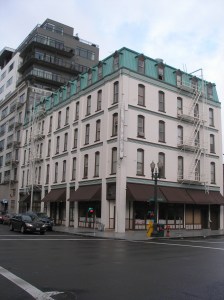
GOLDEN WEST HOTEL @717 NW EVERETT @ PORTLAND,OR

GOLDEN WEST HOTEL @717 NW EVERETT @ PORTLAND,OR

Golden West Building

When Portlanders talk about the city’s African American history, many speak of the black shipyard workers who were relocated to inner North and Northeast after the 1948 Vanport flood.

Fewer know about the African American business district that thrived around Union Station in the early 1900s. Among black-owned businesses, the Golden West Hotel, 707 N.W. Everett, became the social focal point with its restaurant, Turkish baths, barbershop, gambling room, gymnasium and ice cream parlor.

Now a project to better display Golden West’s history is among 12 recipients of city grants from the Vision Into Action Coalition.

“It was surprising to some of the committee members the African American history that existed near Union Station. They considered that area Chinatown or Old Town,” says Stephanie Stephens, Vision Into Action’s manager.

The coalition is acting on priorities, such as acknowledging city history – identified during Mayor Tom Potter’s visioning process. A committee of community, business and government representatives chose recipients from 55 applications.

The grants range from $2,500 to the Good in the Neighborhood multicultural music and food festival to $10,000 to expand the newspaper Street Roots on the east side.

Bogle’s father owned the hotel barbershop. Her son, Dick Bogle, became a city commissioner.

The new project, led by historian Jackie Peterson Loomis on behalf of Central City Concern, will upgrade the display and add another window box. Peterson Loomis, co-founder of the Old Town History Project, plans to incorporate audio, including music from the time and interviews with people such as Dick Bogle.

“It’s an opportunity to position the Golden West as one of the most important centerpieces for this quite unique community of middle-class African Americans,” Peterson Loomis says. “It was a very tiny black community in a very racist city and state, but they really managed to build a community in that neighborhood.”

By 1900, most of the 1,000 African Americans in Portland lived near Union Station, Peterson Loomis wrote in the grant application. Before 1885, they were limited to jobs as bootblacks, domestics and laborers. But as steamships and railroads flourished, African Americans gained better-paying jobs as Pullman porters, barbers and hotel cooks and waiters, giving rise to a middle class.

Other black-owned businesses also thrived around Union Station, from pool halls to haberdasheries, as well as churches.

Peterson Loomis credits Will Bennett, an African American community activist and amateur historian, and Darrell Millner, a Portland State University professor of black studies, for advocating recognition of the business district.

“We need to tell Portland’s African American history to understand Portland’s history,” says Bennett, whose Web site,african-american-historical-district.com, chronicles the hotel’s story.

The Golden West and surrounding businesses, Bennett says, “became a place for us to become a community.”

EXTRA – Visit the Golden West Building

Absent from the story below is mention of the current use of the Golden West Building. It provides transitional housing for persons with a severe and persistent mental illness.

Posted in Uncategorized | Tagged , , , , , , , , , , , , , , , , , , , , , , , , , , , , , , , , , , , , , , , , , , , | Leave a comment

Black History Film “Local Color” Rereleased


Hi Will, We haven’t been keeping a real accurate tally but, as near as we can figure it, OPB has donated around 350 copies of Local Color to libraries, schools & civic organizations. We are also working to make the program available to watch on-line. Jeff

On 9/13/10 3:28 PM, “WILL BENNETT” wrote

Jeff =
Thanks….
how do I find out just how many copies have been distributed from OPB?
Peace
Will b.
(~_~)
Will, In the future, please have anyone interested in getting copies of “Local Color” or in having a public showing of Local Color to contact me directly. We have a limited number of copies of the program and want to make sure they are distributed fairly.Please email me with your request for copies including a description of who will get the copies and how they will be used.
Jeff Douglas
Vice President of Local Production
JDouglas@opb.org
Thank you|OPB-TV
From the Portland Skanner, July 17 2008
Groundbreaking documentary about Oregon’s racist past comes back to life on DVD
Oregon has a long history of racism and discrimination.
While present-day Oregon is known for a self-congratulating liberal image, Portland State University Professor Darrell Milner says truth is often the casualty.
“You don’t appreciate the origins of racism in Oregon,” he said.
A newly released documentary will help uncover those ugly truths.
In 1991, broadcast journalist Jon Tuttle created “Local Color,” a film that chronicled the little known history of the people involved in the struggle for civil rights in Oregon. The film, produced by Oregon Public Broadcasting, saw only a handful of showings over the next 17 years – its release hampered by a copyright battle over film footage used in the documentary. After solving those disputes, OPB finally released “Local Color” on DVD this week.
“This documentary is a real good knock on the door,” said Millner, who says the average person will probably learn something “pretty unsavory” about the way African Americans were treated in Oregon. Whether it was laws requiring annual whipping of Blacks until they left the state, state exclusion laws or real estate redlining, the one-hour documentary puts traditional Black history lessons on watch.
“Once you get a taste of truth, a taste of reality … you don’t lose that taste,” said Millner, who says the film’s release and distribution in schools will help advance the teaching of more accurate Black history in public schools.
Even the film’s creator had little knowledge about the way Blacks were treated in Oregon – one of the reasons he set out to make the documentary. After a brief battle with leukemia, Tuttle died shortly after the film was released in 1991. At the time, he was OPB’s lead producer for their documentary unit.
The DVD’s release also comes at a time Portland Public Schools are embracing a more thorough teaching of state history. In the fall, more teachers will be presenting the Black history curriculum “Beyond the Oregon Trail” in middle school classrooms.
The program, developed by the Portland organization Uniting to Understand Racism, has been used for several years now by some teachers, although this marks the first year it was officially approved by the school district.
The curriculum also will be used in the Hillsboro school district this year. Macceo Pettis, of Uniting to Understand Racism, said the teacher training and district support help change a system that has whitewashed history.
“We’re not just victims and bad guys and welfare recipients,” he said.
Millner says there needs to be a more comprehensive approach to teaching the history of people of color’s contributions — and discrimination — in Oregon.
“Dealing with this kind of history, the first responsibility is to create a context,” he said.
The film is available through Oregon Public Broadcasting’s website, at www.opb.org, following the links to “shop.”
Golden West Restoration
The Central City Concern will be restoring and expanding the African American history display, visible on the outside of their headquarters in the former Golden West Hotel, at the corner of Northwest Everett and Broadway.
Long a piece of Portland’s African American history, the Golden West served as the only place Blacks could stay until the passage of Oregon’s 1953 public accommodations law. For more information about the hotel and the greater project to restore the African American historical monument and the Golden West Project, visit Will Bennett’s website at www.african-american-historical-district.com.
The display’s expansion and restoration – sunlight and some water damage has left the displays in need of repair – were made possible through a $9,250 grant from the city’s Vision into Action program (an offshoot of visionPDX).
Posted in Uncategorized | Tagged , , , , , , , , , , , , , , , , , , , , , , , , , , , , , , , , , , , , , , , , , , , , , , | 6 Comments

Albina’s Story


From the Urban League of Portland/Events

Annual Meeting on June 17th, 2008If you have ever wondered about the history of African-American people in Portland, read papers by talented OSU students Andrew Seher and Meaghan Josh, who wrote award-winning papers on the history of the Urban League in Portland in the 1960s. Also, check out OSU’s digital collection of Urban League historic photographs, part of their multicultural archives.

Honorees, Andrew Seher and Meaghan Josh

Posted in Uncategorized | 3 Comments

‘The most racist city’


One man’s quest for an African American historic district

‘The most racist city’
From The Sentinel Nov 2007
By Laura Paris
Photo by Jason E. Kaplan

Will Bennett with at the Golden West Hotel, the inspiration for his website, African-American-Historical-District.Com

‘The most racist city’

Ask Will Bennett about his website, and he’ll tell you a story.

It begins in 1989, when a group called the Friends of the Golden West set about to build a “comprehensive cultural resource inventory of African American contributions to the Pacific Northwest society.” The first step of the journey was to get a historic building in Chinatown renamed from the Broadmoor to its original name, the Golden West Hotel.

The building, on the corner of Broadway and Northwest Everett, is now a shelter for homeless people with mental illness. But when it was built in 1906, it was the only hotel in Portland where black railroad workers were allowed to stay.

The next step on the group’s agenda was to get the building placed on the National Register of Historic Places and make it a more prominent historic symbol. Finally, the group sought to identify a historically important location in which to open an African American history museum and to define districts that were historically significant to the black community.

The group successfully changed the building’s name. To this day, the Golden West is not yet nationally recognized as a historic site.

Bennett, who describes himself as a “community practitioner and amateur historian,” wants to change this, beginning where the group left off at the Golden West and eventually establishing more formal places dedicated to teaching local black history, like a museum, landmarks and official historical districts.

He’s taken some first steps — connecting with local black studies professors and historians and reaching out to Portland Public Schools. Slowly, the interest is building. He recently presented “Local Color,” a documentary that chronicles Portland’s history of racism, to a group of Portland social studies teachers at Franklin High School’s Professional Development Day, in an effort to help bring more local African American history into the curriculum.

Portland Public Schools needs to integrate more Pacific Northwest culture. To teach African American history, you need to teach Portland African American history,” says Bennett. “Portland was [known in the black community as] the most racist city this side of the Mississippi.

As for the historical district, Bennett says that for now, at least, it’s virtual. “My site — that’s the district for right now,” he explains. He envisions a future district around Union Station, which he argues was the first African American community in the city, as well as along North Vancouver and Williams.

Bennett hopes the move toward establishing a district and historic landmarks will happen organically. “I don’t want to come to no decisions,” he says. “I want all the neighborhood involvement. The community needs to make the decisions.

”PPS Curriculum Adoption: Oregon’s Racist Acts http://tinyurl.com/ygpcamy

EXTRA – Visit the Golden West Hotel/Building

Posted in Uncategorized | Tagged , , , , , , , , , , , , , , , , , | Leave a comment