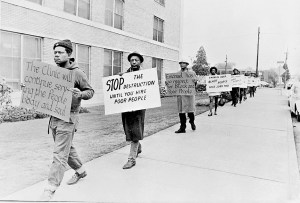
City aims to overcome blacks’ distrust from past dislocations


Two steps forward for the rest of Portland, one step backward for us. That’s the view of many longtime black residents about “progress” in Portland’s inner north and northeast neighborhoods.

Paul Knauls Sr. operated a thriving soul food restaurant, bar and pool hall in Portland’s black business district in the late 1960s, but lost his lease when the building complex at North Williams Avenue and Russell Street was razed to make way for Emanuel Hospital’s expansion. The expansion was nixed in 1973 when Emanuel lost federal funding, and the site was used as a parking lot until recently.

Hundreds of residents and black-owned businesses were displaced for the construction of city-owned Memorial Coliseum in 1960. Scores more were cleared out when Interstate 5 was extended through North Portland in the early 1960s.

For those and other improvement projects, the traditional black community of Albina -a once-independent city in present-day inner North and Northeast Portland – was the path of least resistance.

“Those neighborhoods were essentially targeted,” said Darrell Millner, black studies professor at Portland State University. “The underlying, perhaps unstated motivation, was to rid the community of some undesired properties and some undesired populations.”

Even when the Alberta Street and Mississippi Avenue business corridors blossomed in recent years, many blacks say the city-aided renaissance left longtime black merchants and residents priced out of shops and homes.

Now the city vows to do things differently, as it launches a major new initiative to improve north and northeast business corridors and surrounding neighborhoods, said John Jackley, communications and business equity director for the Portland Development Commission.

After the city urban renewal agency plowed tens of millions to spruce up downtown, the Pearl District, Lents and other areas in recent years, Jackley said, PDC’s new mantra is: “It’s North/Northeast Portland’s turn.”

Study kicks off expansion

On Dec. 10, the PDC funded a $20,000 study to chart areas ripe for redevelopment and public investment. Among the likely targets: commercial spines of Martin Luther King Jr. Boulevard, Alberta and Killingsworth streets, Lombard Boulevard and the St. Johns business district.

One likely scenario is enfolding those areas into the Interstate Corridor Urban Renewal Area, which has largely focused on supporting the new MAX line in North Portland. District expansion would provide PDC tens of millions of added property tax dollars for business assistance, developer subsidies and affordable housing, within the existing boundaries and the added territories.

The PDC also expects to approve a similar study this year to create a new downtown urban renewal district, possibly located near Portland State University or the Con-Way site in Northwest Portland, Jackley said.

The PDC made its mark managing large-scale downtown projects with big developers, but vows to employ a more neighbor-friendly approach in north and northeast, similar to its Lents urban renewal project in Southeast Portland. That means smaller-scale projects, Jackley said, and relying on community members for their ideas on revitalizing downtrodden areas.

But there’s a history of mistrust in North and Northeast Portland, especially among blacks.

Charles Wilhoite, the black PDC chairman, said community leaders remember the city’s past missteps in inner North and Northeast Portland. Now, there’s “an opportunity to fix it,” he said.

Skepticism abounds

Count JoAnn Bowman and James Posey among the skeptics.

“I don’t have a lot of hope that giving PDC more money is going to benefit residents, either short-term or long-term,” said Bowman, executive director of Oregon Action, and a former state lawmaker and onetime African-American Chamber of Commerce officer.

“Guess who is going to benefit from this? It’s not going to be the people who are neglected and disadvantaged,” said Posey, a small-businessman and president of the National Association of Minority Contractors of Oregon. Posey wants to see job creation in the area, such as small-scale manufacturing or sites for black trades members, not just more barbecue restaurants and hair salons.

When former television reporter Lew Frederick campaigned door-to-door in his unsuccessful 2006 bid for a Multnomah County Board of Commissioners seat, he heard a litany of complaints about how the city neglected black business owners while Alberta and Mississippi bloomed. He heard tale after tale of predatory real estate agents and mortgage loan officers taking advantage of elderly and unsophisticated black homeowners.

Yet Frederick and other black leaders have detected a change in PDC’s approach since 2006, when dozens of blacks staged a protest at a commission meeting.

Since then, the agency has been more aggressive about assuring that minority hiring targets are met at city-aided construction projects, Frederick said.

Knauls, despite losing three businesses in Emanuel’s ill-fated “expansion,” is more hopeful about the urban renewal agency’s new direction.

“I think they’re finally, after all these years, on the right track,” said Knauls, who co-owns Geneva’s Shear Perfection barber shop and hair salon on Martin Luther King Jr. Boulevard. “What’s needed is some space for lower rent so African-Americans can rent and stay in the neighborhood.”

Knauls also owns an empty lot on the boulevard, and seemed confident PDC will help him land a tenant and financing for a custom-built facility there.

Harold Williams Sr., a consultant and Portland Community College board member, is another former PDC critic now collaborating with the agency. “You can’t kill the golden goose and ask that it save you,” he said.

Williams is hoping to see some PDC investments along Killingsworth, noting that voter approval of a PCC bond measure last November should fund some new construction at the Cascade campus on that street.

One sign of change in the winds is the abandoned gas station on North Albina Avenue, across the street from Peninsula Park, purchased in 1992 by Delta Sigma Theta Sorority. The black professional women’s sorority expects to break ground soon on a new “green” community center built from reclaimed cargo shipping containers, with help from the PDC.

“They even gave us a grant we didn’t ask for,” said chapter leader Chris Poole-Jones.

James Berry has been complaining since 1990 about outmoded residential zoning on a four-block strip of Killingsworth, which includes a cluster of black-owned businesses in his building on Killingsworth and 16th Avenue. The businesses couldn’t get bank loans because of the restrictive zoning, Berry said.

But with support from the energized neighborhood association, Berry said, the zone change finally was granted in 2008. With gentrification in the area, the neighborhood association has more clout, he said, and the city “started paying attention.”

The PDC offered him storefront improvement funds after the zone change, he said.

Nurturing communities

PDC leaders say they want to nurture local businesses and residents, not spur more gentrification, in this go-round. They note that the Hispanic population in the area is growing rapidly, so the community is becoming more ethnically diverse and less segregated.

But the city’s goal is driving up property values, because that’s what funds urban renewal, said Karen Gibson, an urban studies professor at Portland State University who has researched the history of Albina and the PDC’s role in the area.

The PDC is designed to spur “bricks and mortar,” she said, but revitalization also requires nurturing people and community institutions.

Recent population data shows North and Northeast Portland are luring more affluent and college-educated young whites, while their black counterparts from Portland are seeking other cities with larger and more vibrant black communities, Gibson said.

Posey, a leader of the Coalition of Black Men, said many young Portland blacks lack confidence to undertake entrepreneurial endeavors here. “There’s very little psychological conditioning for a bright future,” he said. “People are not willing to dream about what’s possible.”

Millner, the black historian, said gentrification of inner north and northeast is an inevitable outgrowth of the Portland-area’s urban growth boundary, which places a premium on land close to downtown. He predicts PDC’s latest initiative will result in Alberta- and Mississippi-style redevelopments, which have tended to be upscale, white-owned ventures.

“It’s impossible to control gentrification,” Millner said. “There’s very little that PDC can do to prevent that from happening.”

Most of Knauls’ Geneva’s employees can no longer afford to live in the area. Blacks now drive in from outer Southeast Portland and Gresham to get haircuts at his barber shop/salon, he said, and to commute to work.

Berry hopes to bring a restaurant to his Killingsworth building, now that the zoning is hospitable. But that may mean displacing some black-owned business tenants.

“My business can’t survive by just black people buying from me,” Berry said. “We need businesses that mirror the neighborhood.”

Jackley, who has patiently made the rounds of black community organizations to explain PDC’s new initiative, hopes PDC officials can allay concerns of skeptics like Millner by listening to residents and approaching redevelopment with community concerns in mind.

“In previous generations, urban renewal started with a poor neighborhood and a bulldozer,” Jackley said. “It’s just a different world today, and a different approach.”

stevelaw@portlandtribune.com


North/Northeast: Urban renewal or urban removal?

Efforts and events that reshaped inner North/Northeast Portland:

1948:

Flooding overruns Vanport, a wartime city near present-day Delta Park in North Portland, destroying 5,295 housing units and displacing 17,000 people, 35 percent of them black

1960:

Memorial Coliseum completed; 476 housing units destroyed, 46 percent of them occupied by blacks

1961-1966:

Interstate 5 freeway through North Portland completed; displaces 125 homes occupied by blacks and numerous black-owned businesses

1964-1973:

Albina Neighborhood Improvement Program; Portland Development Commission spends $2 million on home-repair loans in inner North and Northeast Portland, builds Unthank Park near North Shaver Street and Kerby Avenue, makes sidewalk and other improvements

1970-1973:

Emanuel Hospital urban renewal; with city’s assistance, 188 nearby homes and black commercial node at N. Russell and Williams are cleared to make way for hospital expansion; Emanuel halts work in April 1973 with loss of federal funding, leaving some blocks undeveloped for decades

1970-1975:

Neighborhood Development Program – using $14 million in federal Model Cities funds, PDC pays for home-repair loans and community services in inner north and northeast neighborhoods

1993:

Oregon Convention Center Urban Renewal Area expanded to include part of Martin Luther King Jr. Boulevard; city excludes residential areas because of bad blood left from Emanuel land clearing

2000:

PDC creates Interstate Corridor Urban Renewal Area, in tandem with extension of MAX line along Interstate Boulevard

2008:

PDC begins study to expand urban renewal in North and Northeast Portland

Sources: Fair Housing Council of Oregon, Brief History of Urban Renewal in Portland, Oregon, by Craig Wollner, John Provo, Julie Schablisky; Bleeding Albina: A History of Community Disinvestment, 1940-2000, by Karen Gibson

What is the Restorative Listening Project on Gentrification?

understandingracism

Posted in Uncategorized | Tagged , , , , , , , , , , , | Leave a comment

Community Dialogue on Racism


Community Dialogue on Racism

Community dialogue, 1/21/09

Uniting to Understand Racism is hosting a six-week Community Dialogue on Racism, beginning Wednesday, January 21st and going through February 25th.  This is free and open to the public, and all materials are provided, but is limited to16 participants.

Please expect to attend each session for the full six weeks.

The sessions will go from 6:30 to 8:30 PM, and will be held at the Providence Portland Medical Center in the Behavioral Health Services Building B, 5228 NE Hoyt, Portland, OR 97213. A small parking lot and the front entrance to the building are ½ block west of NE 53rd and NE Glisan.

We use a multi-media approach in presenting the Awareness Model and look forward to stimulating discussions.  If you have any questions please contact Theresa Sayles at Theresa.Sayles@providence.org , or me at: pettis0993@comcast.net.

Be sure to leave us your full name, a good e-mail address, Ph #, and how you identify yourself ethnically and culturally.  We need this to insure a balance of Folks of Color and Euro- American Folks.

Macceo Pettis, UUR

Coordinator/Facilitator

Cell Ph (503) 249-8702

Posted in Uncategorized | Leave a comment

Jefferson received a $5000 grant for restoring the Jefferson Artworks


Two pieces of news today from Jefferson.

1. Jefferson received a $5000 grant for restoring the Jefferson

Artworks. This grant comes from the Autzen Foundation. The money is

banked in Jefferson’s accounts and is ready for spending on restoring

Jefferson’s artwork. I’ve asked Nina Olsson to direct the project

from here on, so Nina and her colleagues can make priorities. Go

Friends of Art in the Schools!

2. A TV producer contacted Jefferson today. I talked with him

briefly. He’s interested in the Jefferson Artworks but mostly in the

artist below. Ginny, I thought you might know this artist and be able

to offer advice about where to hunt.Thanks!

Jason Renaud
Jefferson Artworks
503-367-6128
———- Forwarded message ———-
From: Renato Rodriguez <RRodriguez@opb.org>
Date: Tue, Jan 6, 2009 at 5:21 PM
Subject: WPA artist
To: pdx97217@gmail.com
Hi Jason,

Thanks for speaking with me today. The artist who I am trying to find
out more about is an African American woman named Thelma Johnson
Streat. She graduated from Washington HS in Portland in 1932. She
became a WPA artist and worked with Diego Rivera in San Francisco.

You can see a bio here:
http://www.wpamurals.com/StreatTJ.htm

I’ll be in touch,

Renato Rodriguez
Associate Producer

History Detectives
Oregon Public Broadcasting
7140 SW Macadam Ave.
Portland, OR 97219
www.opb.org

Direct: 503-445-1850
Fax: 503-293-1970

Visti the History Detectives online at:
http://www.pbs.org/opb/historydetectives/

Posted in Uncategorized | Leave a comment

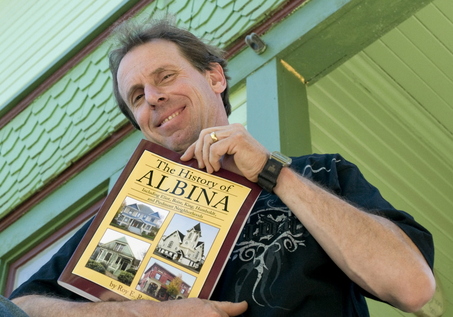
Boise and Eliot: Local historian’s quest protects black history


Boise and Eliot: Local historian’s quest protects black history – Portland News | Oregon Local News – OregonLive.com.

Posted in Uncategorized | Tagged , , , , | 2 Comments

Dick Bogle


Posted in Uncategorized | Tagged , , , , | 2 Comments

Today’s African-American community in Portland dates back to…


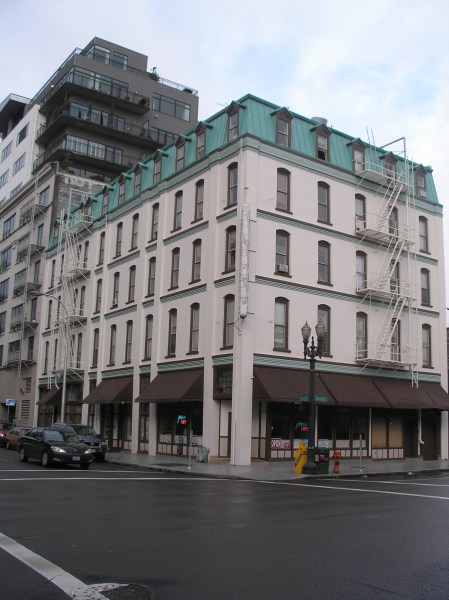
GOLDEN WEST HOTEL @707 NW EVERETT @ PORTLAND,OR

In the early year’s of this century, the Golden West Hotel offered blacks the best, and only, hostelry in Oregon. Connected with the hotel is a well appointed barber shop owned by Waldo Bogle; the finest ice cream and candy shop west of Chicago, serving its patrons all kinds of delicacies and soft drinks under the constant supervision of A.G. Green, the proprietor; a well appointed restaurant serving all kinds of dishes. Wo Gong, manager; a well furnished club room with Turkish baths and gymnasium for the Golden West Athletic league. Under the management of Geo. P. Moore; all provide for the amusement and satisfaction of the guest.
PORTLAND TIMES AUGUST 2, 1919

Portland's historic Union Station

Today’s African-American community in Portland dates back to the beginnings of the transcontinental railroad. Many black workers made Portland their home in order to have access to Union Station and jobs on the railroad…

Golden West Hotel
717 NW Everett N.W. Broadway & Everett
Until Oregon’s public accommodations law was passed in 1953, this was the only hotel in Portland catering to African Americans. Built in 1906 for railroad men away from home, it soon became a social center, especially on Sunday afternoons. With the Mt. Olivet Baptist Church just across the street, the Golden West Hotel hotel drew church goers to its restaurant, billiards room, ice cream parlor and candy shop. There was a thriving saloon, too (though perhaps not after church!). The barber shop was operated from 1913 to 1930 by Waldo Bogle, grandfather of former television news anchor and Portland City Commissioner Dick Bogle. Closed during the Depression, the hotel now serves the homeless mentally ill. Interpretive historical displays are on either side of the entrance.

Posted in Uncategorized | 2 Comments

PDX Civil Rights Project


Hi Will,

I wanted to let you know that the first set of interviews and documentaries from my Portland State University and University of Portland students are finishing up. I have scheduled two public presentations, one for each school, for December 3rd. Here’s the information:

PSU PDX Civil Rights Project Public Presentation

When: December 3, 2008 from 2-4:30 pm. Documentary will start at 2:30 pm
Where: PSU’s Smith Memorial Student Union, Room 296
Who: The public is welcome to attend.
What: This documentary will focus on the three major areas of the Civil Rights movement in Portland: education, housing, and employment and it will incorporate interviews with 13 people and historical research by students.
*Light refreshments will be served
UP PDX Civil Rights Project
When: December 3, 2008 from 7-10 pm, Documentary will start at 7:15 pm.
Where: University of Portland’s Buckley Center Room 209
Who: The public is welcome to attend
What: This documentary will focus on a historical timeline, incorporating memories from Paul Knauls, Senator Avel Gordly, Kent Ford, and Joyce Harris about specific events in Portland’s African American history.
*Light refreshments will be served
Thanks and I hope to see you there!
Sincerely,
Felicia Williams
Instructor, PSU Black Studies Dept.
Instructor, UP History Dept.
fwilliam@pdx.edu
Posted in Uncategorized | Leave a comment

New Website Exposes Ku Klux Klan


via:The Skanner – Challenging People To Build A Better Future Now

With a new historical webpage, University of Washington scholars are shining a bright light on one of the darkest chapters of Washington history – the days when the Ku Klux Klan was a force in the state.

It was a brief era when the Klan had tens of thousands of members. KKK rallies drew crowds estimated at 50,000, the Klan entered floats in parades, there were Klan weddings and Christmases and the Klan even published its own newspaper, “The Watcher in the Tower,” in Seattle.
Historians have created a webpage packed with articles, rare photographs and documents about Klan activities in the state during the 1920s as part of the Seattle Civil Rights and Labor History Project, headed by James Gregory, University of Washington professor of history, and director of the Harry Bridges Center for Labor.
The project came about when history doctoral student Trevor Griffey planned to teach a 2006 class on local history of White supremacy. Griffey thought many people didn’t grasp why the civil rights movement was needed in Washington, a place with a reputation of being liberal.
“We tend to associate images of Klansmen burning crosses, wearing white robes and holding public rallies with the South,” Griffey said. “But seeing some of the images we found and learning the stories of a secret society of White supremacists in Washington state shows that the Pacific Northwest also has a history of racism that we shouldn’t overlook.”
The Klan came to Washington as part of the second wave of KKK activity in the United States. Like the original Klan that sprang up after the Civil War, this version originated in the South in 1915 and spread across the country. By the early 1920s the Klan dominated the legislatures in Indiana, Oklahoma, Oregon and Colorado.
In Oregon, the KKK led a successful 1922 effort to outlaw private Catholic schools. The following year the group brought its anti-Catholic, anti-Semitic and anti-immigrant message to Washington.
“They tried to make the Klan seem natural by having picnics, patriotic fireworks and reenactments of the battle of Bunker Hill. They appealed to people’s Christianity, their fear of foreigners and their patriotism by marketing the Klan as an essential part of protecting the nation,” said Griffey. “I find it remarkable that they were able to draw tens of thousands of people, and in some cases as many as 50,000, from all over Washington to watch Klan ceremonies in Renton, Issaquah, Yakima and Lynden.”
Nationally, the high-water mark of the Klan came in 1924 when it helped push a highly restrictive immigration bill through Congress. In Washington it promoted legislation outlawing private Catholic schools, but the initiative was defeated.
Failure of that measure, along with internal factional battles and scandals that involved high-ranking state figures who were Klan members sapped the organization’s power and appeal. As its influence waned, Bellingham and Whatcom County became the KKK’s last strongholds in the state.
By 1929, the organization, which had once boasted of having four million members nationally, had largely disappeared.
“This is not just about the past,” Griffey said. “The Klan failed as an organization, but its fusion of White supremacy and Christian patriotism was not discredited. The Klan in the Northwest promoted itself as being 100 percent American, not by lynchings or race riots.”
The KKK history page is at http://depts.washington.edu/civilr/kkk_intro.htm. The entire civil rights/labor history page is at http://depts.washington.edu/civilr/
The Skanner – Seattle (206) 233 9888
copyright The Skanner Newspaper Group

understandingracism

Posted in Uncategorized | Tagged , , , , , , , , , | Leave a comment

Post Traumatic Slave Syndrome:


America’s Legacy of Enduring Injury and Healing

Joy DeGruy Leary is a priceless asset to us all. She has lifted the bandages from the 400 year-old abscess of slavery that remains un-healed.

Many black and white Americans have been taught that slavery ended by legislative means in 1865 – so the issue is neatly side-stepped in the school curricula, print and broadcast. However the hallmark of classroom teaching and responsible journalism must be proper context – for full understanding. The removal of the shackle is important, but what about the emotional damage suffered by the enslaved?

Dr. Leary has raised this argument brilliantly, for years, lecturing far and wide…Dr. Leary’s message on “Post Traumatic Slave Syndrome” has helped…grapple with multiplicity of problems today….

Now Dr. Leary has set down her highly important message/thesis in print And so, to quote the wondrous physician: “Let the healing begin.”

—Gil Noble, Producer, Like It Is WABC-TV

Dr. Leary’s book is seminal research in the field of differential cross-cultural diagnosis for mental health. Cultural Competence is a requirement for mental health and behavioral science workers. This text is required reading for all learners and practitioners….It opens a window to innovative models for healing in our multi-ethnic, pluralistic and linguistically diverse society.

—Edwin J. Nichols, Ph. D. Clinical/Industrial Psychologist

Dr. Joy DeGruy Leary’s Post Traumatic Slave Syndrome: America’s Legacy of Enduring Injury and Healing is a master work. Her deep understanding, critical analysis and determination to illuminate core truth are essential to addressing the long-lived devastation of slavery. Her book is the balm we need to heal ourselves and relationships. It is a gift of wholeness.— Susan Taylor, Editorial Director, Essence Magazine

At last the book that all people who are truly interested in understanding the lingering psychological and social impact of enslavement on Africans and Europeans has arrived.…a milestone in the understanding of the relationship between racism and slavery…. to understand how the ghost of slavery haunts us all.

—Dr. Ray Winbush, Institute for Urban Research, Morgan State University

Dr. Joy Leary’s mesmerizing, riveting book is vital reading for our time. The corrosive residue of unmitigated and unrelieved atrocities called chattel slavery scours out the very core of our national identity. Neither the descendents of chattel slavery nor its designers have been unscathed. One – doomed to mythologize its meaning, the other to turn searing pain into self-loathing. We ignore our history at our own peril. With Dr. Leary’s potent word we can and will heal.

—Adelaide L. Sanford, Vice Chancellor, Board of Regent, State of New York

Posted in Uncategorized | Tagged | Leave a comment

: oral history interviews :


Source: PSU

Capstone Courses Beginning Fall 2008:

Civil Rights Movement in Portland

Felicia Williams, fwilliam@pdx.edu

The Civil Rights movement changed the way people thought about race and equal opportunity in America. This course will examine how the movement happened in Portland as students record oral histories from African Americans who fought for Civil Rights in Oregon. The interviews will then be digitized and uploaded to the Internet and students will use photographs and clips from the interviews to create a video documentary that can be used publicly.

(~_~)(~_~)(~_~)(~_~)(~_~)(~_~)(~_~)(~_~)(~_~)(~_~)(~_~)(~_~)(~_~)(~_~)(~_~)(~_~)(~_~)(~_~)

Hi Will,

I am in the process of collecting oral history interviews, which will be transcribed and archived at Portland State University. Also associated with the project is a short documentary that will be shown in December and probably posted on youtube. Here are the people being interviewed this fall: Prof. Darrell Millner, Sen. Avel Gordly, Joyce Harris, Paul Knauls, Kent Ford, Percy Hampton, Michael “Chappie” Grice, Lew Frederick, Rev. W.G. Hardy, Sam Jackson, Jr., Lolenzo Poe, Rev. Alcena Boozer, Carl Deiz, Dick Bogle, Dr. Booker Lewis, Charlotte Rutherford, Ron Steen, Lurlene Shamsud-din, and Berria Brooks.

This class will probably be offered again either next summer or next fall with the purpose then of collecting more interviews and creating a website devoted to the Civil Rights Movement in Portland (modeled on Jim Greg’s Seatle Civil Rights and Labor History website).

I think that sums up everything I’m doing. Have a great day!

Sincerely,
Felicia Williams

(~_~)(~_~)(~_~)(~_~)(~_~)(~_~)(~_~)(~_~)(~_~)(~_~)(~_~)(~_~)(~_~)(~_~)(~_~)(~_~)

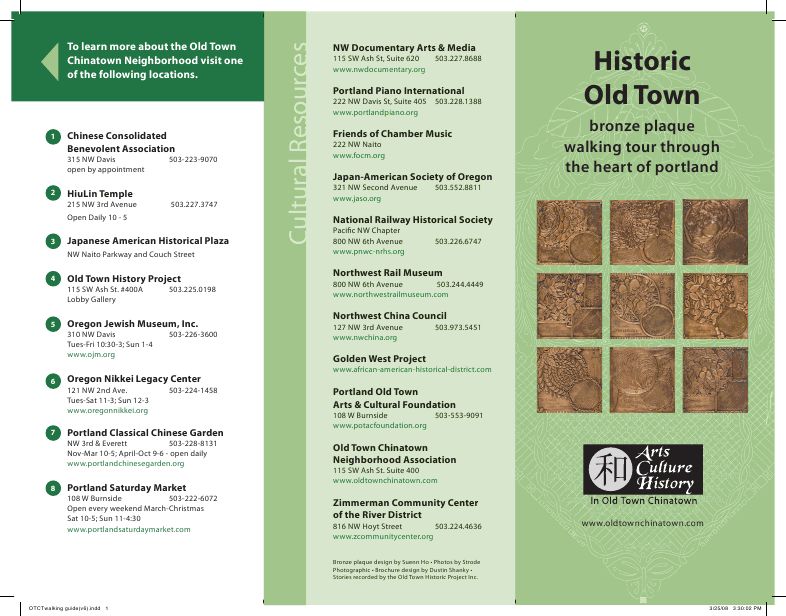
Old Town Bronze Plaque Walking Tour

portland, oregon

Old Town Bronze Plaque Walking Tour

Mahalia Jackson–How I got over {LIVE}

Posted in Uncategorized | Tagged | Leave a comment